
yuuvis® Momentum
Create, operate, and scale DMS applications on a modular, API-first platform – highly scalable, multi-tenant, and cloud-native.


yuuvis® Momentum is designed to efficiently manage information and documents in any format. It offers core DMS functions (such as an intelligent schema, powerful search, dynamic document lifecycle, modern security, audit-proof and certified archiving, and backend customization), integration and extensibility (REST API and ready-to-use interfaces, e.g., SAP, Exchange, or DocuSign), a modern frontend (with a framework for rapid development of custom solutions: apps in the shell), workflow management (integrated Flowable engine including tooling), powerful AI features (for automated input management and RAG integration), as well as a modern, cloud-native architecture (Docker and Kubernetes) and unlimited scalability.
yuuvis® Momentum enables intelligent content management by defining a specific object model (schema). A schema consists of metadata attributes and object types that categorize and describe documents. Object types are reusable and inheritable (e.g., invoice, person, contract).
The system supports a global schema with commonly used object types and attributes. Multitenancy allows multiple tenants to use the same schema while maintaining strict data separation. Tenant-specific schema extensions are possible, enabling SaaS solutions with individual customizations.
yuuvis® Momentum supports three object types: objects (the basic type for document management), folders (without content, used for grouping), and secondary object types (abstract, non-instantiable, designed for more complex schemas similar to delegation in programming languages).
Application schemas group objects for specific business functions without changing the global schema and can reference each other.
You can locate any object in the yuuvis® Momentum repository using its unique identifier and retrieve metadata, content, or specific versions.
Without authentication, you can use the object search through metadata and full text. yuuvis® Momentum provides a search endpoint for queries in the yuuvis® query language, which is based on the CMIS standard and combines SQL-92 grammar with full-text search.
The query language supports SELECT queries for object types and attributes (e.g., SELECT * FROM invoice WHERE amount > 1000), full-text searches with sorting (SELECT * FROM invoice WHERE CONTAINS ('important') ORDER BY date ASC), and aggregations (SELECT COUNT(*), type FROM system:object GROUP BY type). You can combine metadata and full-text searches with ranking, and mathematical functions and audit log queries are also available.
The query language protects your code from underlying changes and saves development time. It is continuously being improved – find the latest information at help.optimal-systems.com.
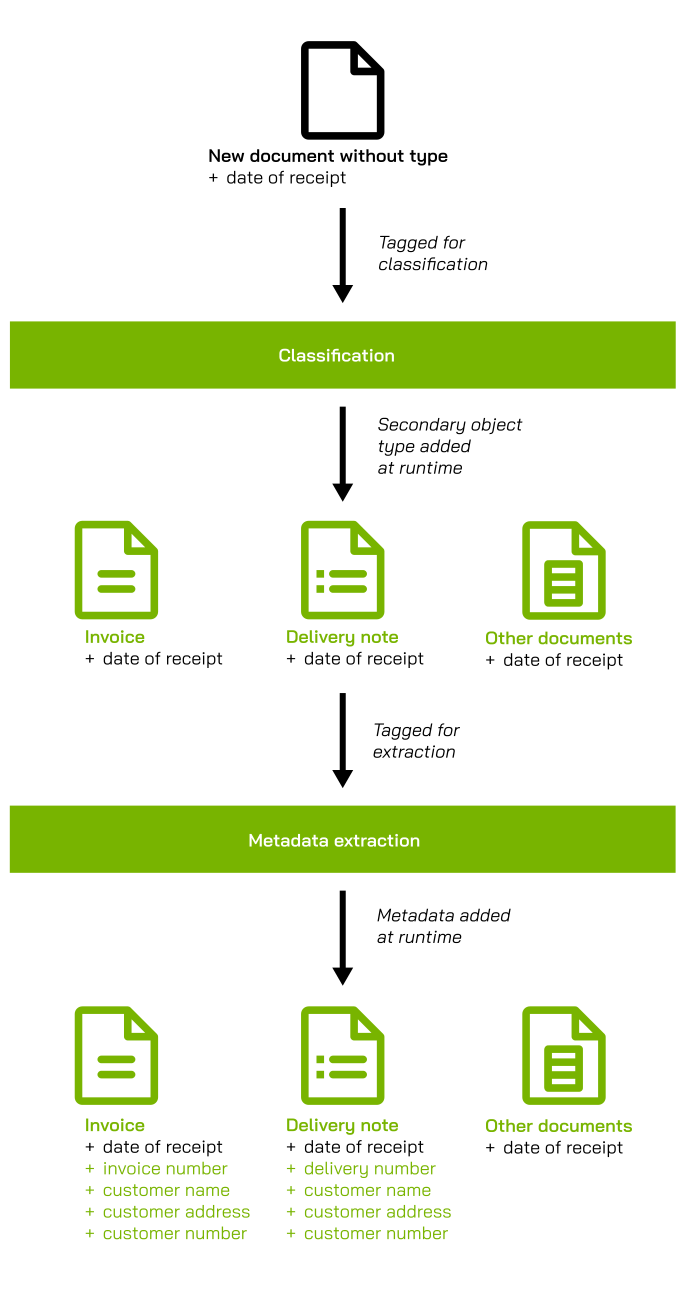
yuuvis® Momentum uses tags to mark the status of objects without changing their metadata. They do not create new document versions and are ideal for status tracking.
Secondary object types (SOTs) can be linked to object instances at runtime. You can add or remove attributes at any point during the object’s lifecycle. The combination of tags and dynamic secondary object types enables dynamic lifecycle scenarios.
Example input management: Incoming documents are tagged for classification. A classification service uses AI to determine the object type and adds the appropriate secondary object type. After being tagged again, another service automatically extracts the metadata. This creates a fully automated document import process through tags and dynamic secondary object types.
Access control is an essential feature of any content management solution.
yuuvis® Momentum offers OAuth2-compatible authentication that can be used with modern identity providers. A sample configuration with Keycloak is available.
Object access is controlled by tenant and role membership. All tenants are strictly separated – access to documents from other tenants is not possible. This core feature is deeply embedded in the system and is transparently supported by all API calls.
Users can be assigned roles. Each role defines conditions for permissions such as "Read" or "Delete." Technically, roles are implemented as dynamic query conditions that are added at runtime based on role membership. This ensures a fast and efficient access control system.
yuuvis® Momentum provides integrated connectors for S3, file systems, and iCAS. Custom drivers can be developed using plug-ins. The archiving path is controlled through object metadata, allowing the system to determine at runtime which object is stored on which medium. Combined with retention time management, this ensures compliant and audit-proof storage.
Additionally, yuuvis® Momentum supports SAP archiving via ArchiveLink, ILM, and CMIS: receipts are stored legally compliant in the backend directly from ERP and S/4HANA processes, ILM policies are adopted and consistently enforced.
For e-mail archiving, the Mail Archive Service (MAS) provides a turnkey solution. The service integrates with Microsoft 365 and Exchange on-premises: e-mails and attachments, including relevant metadata, are stored, classified, and retained in compliance with regulations. Journaling is supported, duplicates are automatically detected, and only one copy is saved. Optional WORM backends ensure additional protection for highly secure scenarios.
Integrity checks protect against tampering: During archiving, a SHA256 hash is generated and stored in the metadata. This can be compared with the storage hash. Validation jobs ensure that objects are not altered without detection.
yuuvis® Momentum enables server-side customization without modifying the core code. Interceptors interrupt the regular processing flow of API calls, execute custom business logic, and then return control to the system.
The triggering process is rule-based: Predicates define when an interceptor is activated – for example, depending on document metadata or the role of the authenticated user. These conditions are expressed in Spring Expression Language (SpEL).
Two mechanisms are available for technical integration: AMQP hooks for message-based communication and webhooks for HTTP-based calls. Interceptors are typically implemented as standalone microservices or serverless functions.
Typical use cases include role-based field visibility (enforced on the server side and cannot be bypassed), asynchronous full-text extraction and OCR integration, as well as the integration of digital signatures.
yuuvis® Momentum integrates seamlessly into existing IT environments – whether in the cloud, on-premises, or in a hybrid setup. Through open APIs and connectors, the platform connects with identity systems, Microsoft 365, or specialized applications.
SAP ERP and S/4HANA
yuuvis® Momentum can be used directly as an audit-proof archive for SAP documents. Out of the box, it supports the ArchiveLink, ILM, and CMIS logs, including the optional transfer of retention periods to archived documents.
Microsoft 365
With yuuvis® Momentum, Office documents can be edited and synchronized directly within the system. The integration enables version control, collaborative editing, and automatic synchronization with Microsoft 365. The Mail Archive Service (MAS) complements this by providing e-mail archiving for Exchange Online and on-premises environments.
DocuSign
yuuvis® Momentum offers an integrated interface to DocuSign for legally compliant electronic signatures. The signature process is supported by status and metadata management and can be incorporated into automated workflows.
The yuuvis® Momentum client follows a modular approach: Apps in the shell. Instead of a monolithic standard client, the yuuvis® Momentum shell provides core client functions and integrates independent, specialized apps – precisely tailored to different use cases. With apps in the shell, yuuvis® Momentum resolves the trade-off between flexibility and consistency: the yuuvis® Momentum shell ensures a unified foundation, while the apps deliver focused functionality – efficient, scalable, and aligned with specific business needs.
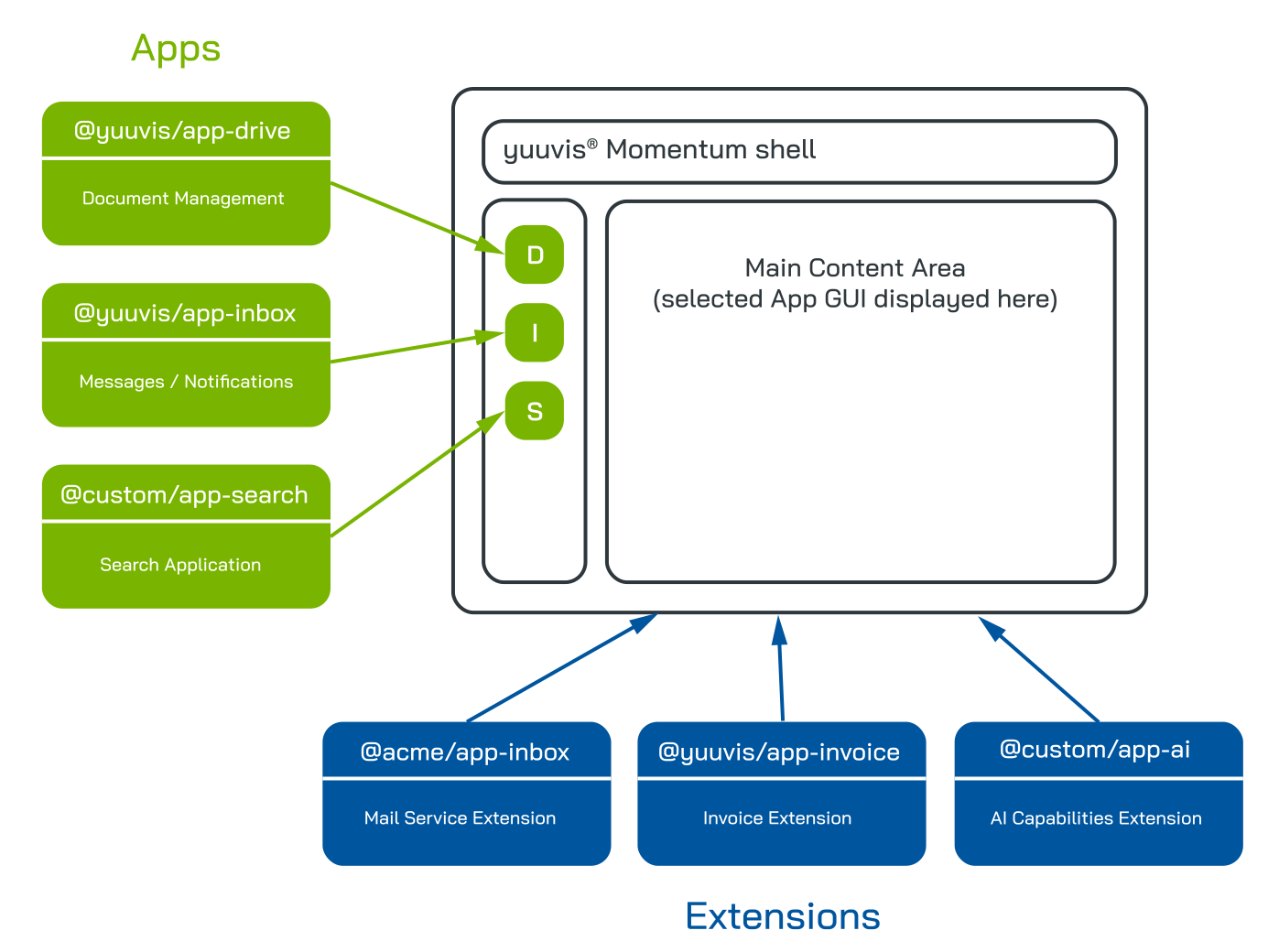
Functional framework of yuuvis® Momentum shell
Security, authentication/authorization, and user management
User preferences, shared core functions (e.g., workflows)
Forms management and hit lists as shared services
Benefits for productivity and maintainability
A tailored user experience for each business domain instead of a “one size fits all” approach
Clearly defined responsibilities and release cycles for each app
Accelerated development and reduced maintenance complexity
Modular apps
Independent applications with their own design and user interface
Shared data access through the same APIs – compliant with roles and tenants
Interoperable: apps can interact and share states
Integration and expandability
Integration via client API and configurable app registry
Unified navigation, session handling, and authorization through the shell
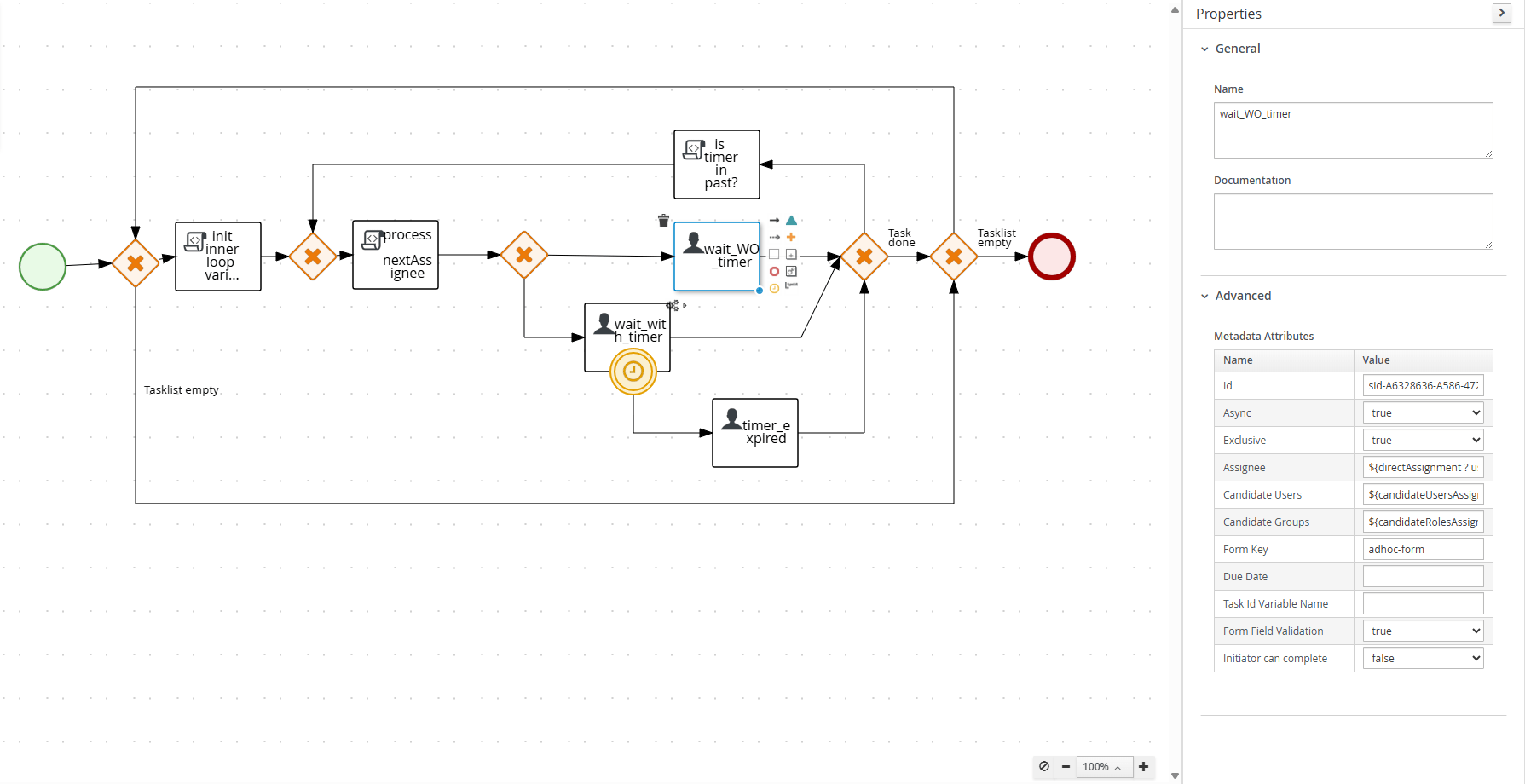
yuuvis® Momentum offers fully integrated business process management. The Flowable engine and a BPMN 2.0 modeling tool form the foundation, while processes run through the BPM API and are monitored via tracking tools. Workflows access the DMS API directly and are integrated into the security system as well as the client library. Modeled BPM forms can be localized and made available in the client.
“We see yuuvis® Momentum as an intelligent and versatile technology. Our developers also feel very comfortable working with the product.”
—Daniel Scherrer, Head of Software Architecture, Abraxas Informatik AG
yuuvis® Momentum transforms DMS processes with AI components for automated processing and chatbot support. All features operate entirely on a permissions basis and integrate seamlessly into existing ECM systems. This way, you can optimize your workflows and focus on the tasks that truly matter.
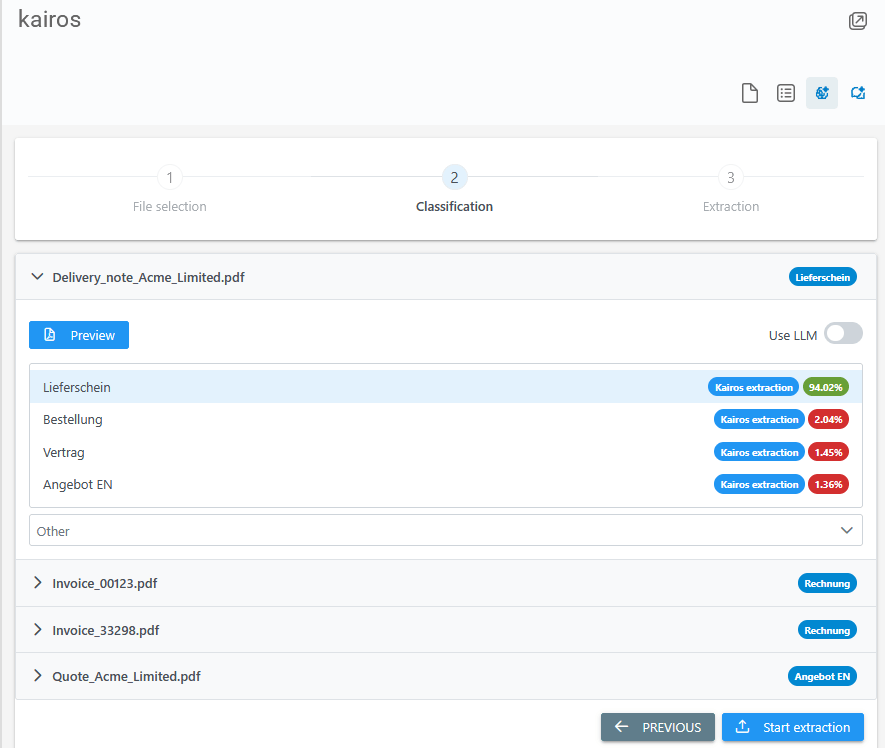
kairos is the smart automation layer for your ECM: AI-powered classification, automatic metadata extraction, and page separation deliver speed and accuracy throughout the entire document process. As a modular extension, the platform adapts to a wide range of use cases and elevates information management to a new level of performance – whether in the cloud or in your own data center.
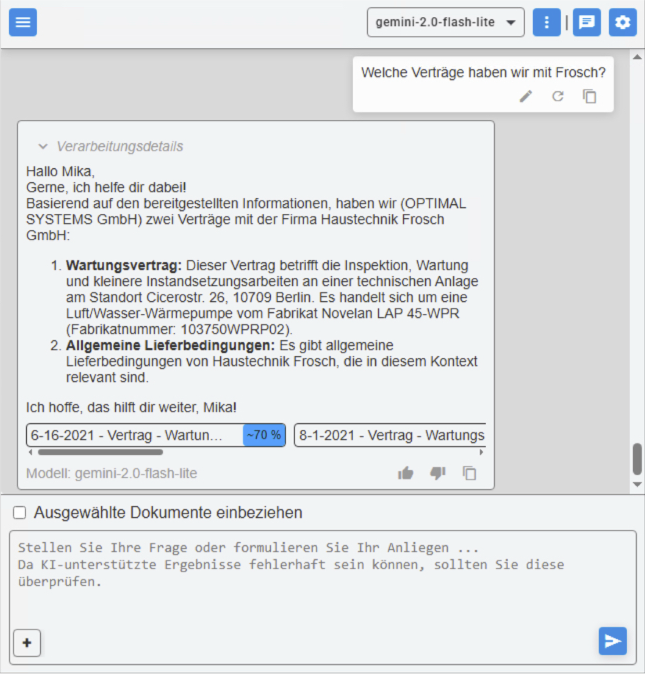
lumee brings conversational AI to where your information resides: into the DMS. Instead of searching through files, you can receive summaries, compare contract versions, or have details explained – with direct references to the original documents. The solution operates fully on a rights- and role-based model, uses only authorized data, and stands out for its speed, security, and ease of use.
yuuvis® Momentum is software made in Germany by OPTIMAL SYSTEMS. It can be deployed on-premises, in the cloud, or in a hybrid environment. We adhere to the highest quality standards for modern information management software, and our solutions are internationally certified.
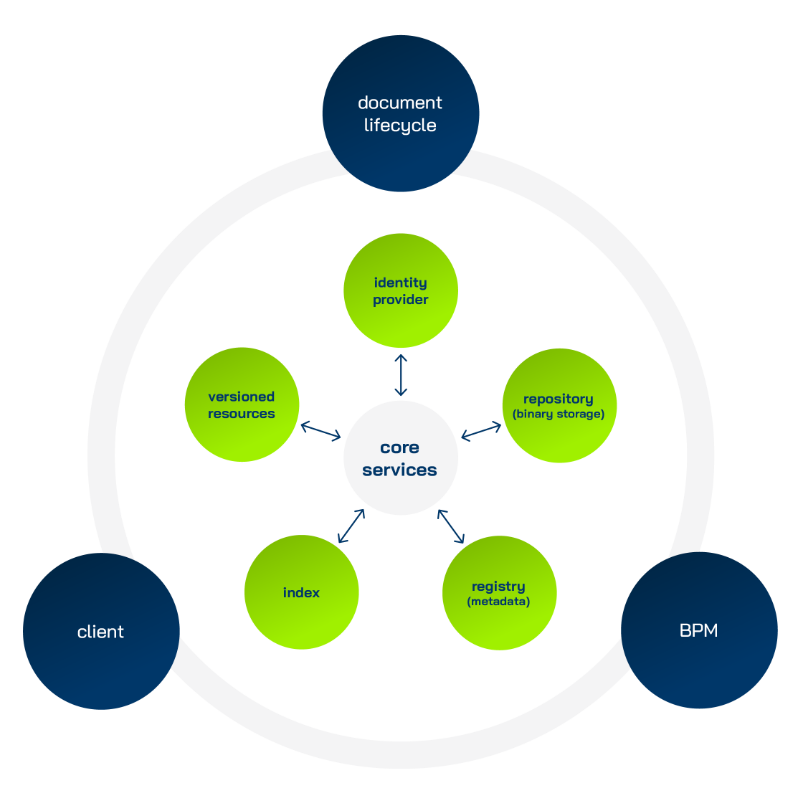
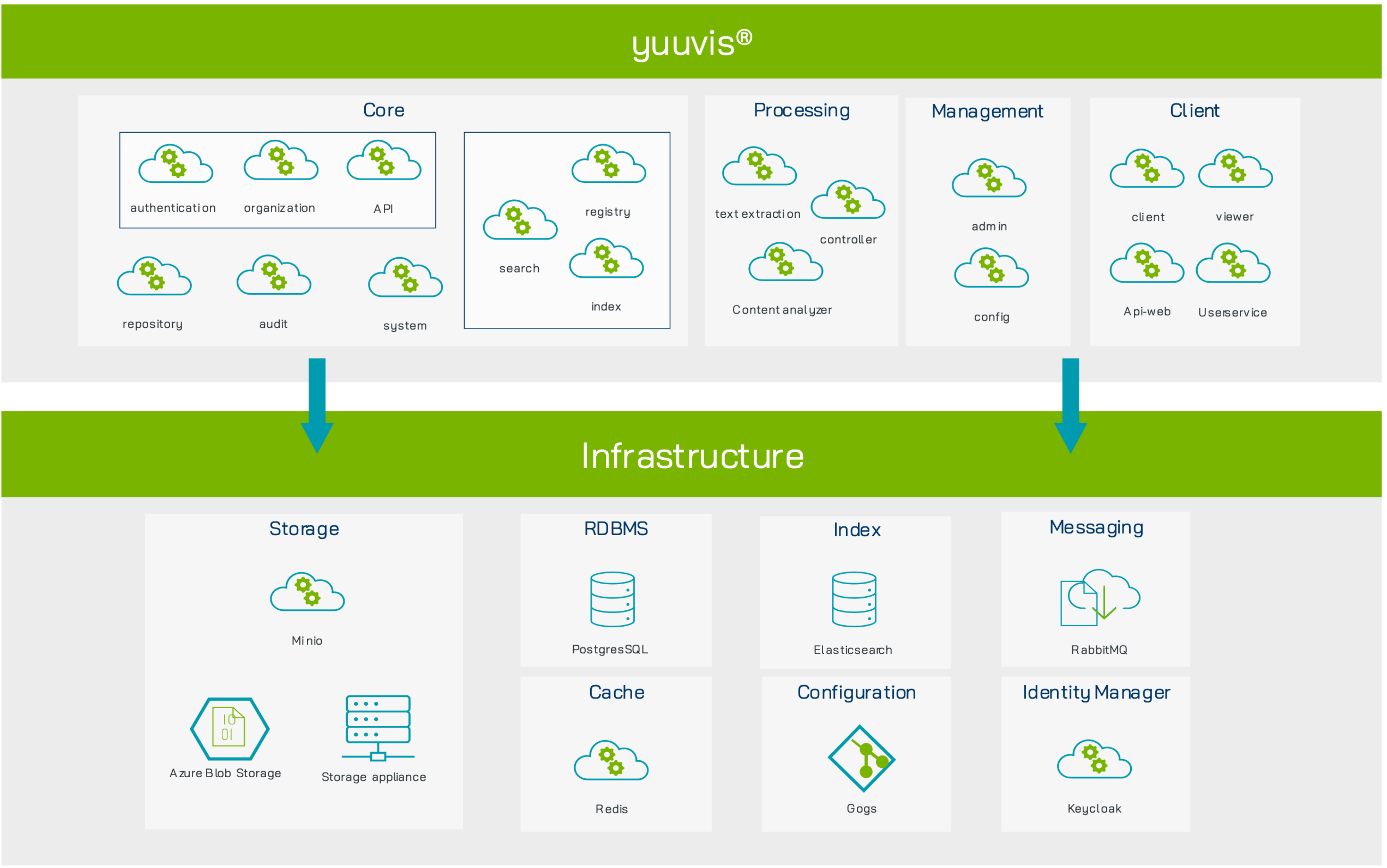
yuuvis® Momentum is built on a multi-layered product architecture based on microservices. The core system includes a fundamental set of microservices essential for smooth operation.
Additional functions and components can be integrated as peripheral services. This unique architecture gives you the flexibility to tailor the system to your specific requirements.
Ready for scalable, portable deployment – from the public cloud to on-premises.
Fault tolerance, auto scaling, and true multi-cloud flexibility in standard operations

Fast setup, reproducible deployments, focus on configuration instead of manual work

PostgreSQL, MS SQL Server, CockroachDB; Elasticsearch; MinIO/S3; Git services; RabbitMQ (AMQP 1.0); Keycloak; Redis

Public cloud, private cloud, or on-premises – identical code enables hybrid scenarios without code migration
yuuvis® Momentum was developed with clear design principles to ensure strategic flexibility, scalability, and stability. These criteria form the foundation for all core functions of the platform.
Handles billions of objects in a single instance with ease, including extremely fast search and retrieval.
Microservices enable horizontal scaling of individual services while the system is running.
Updates without downtime – ideal for global 24/7 applications.
Open-source technologies minimize infrastructure costs.

Fault tolerance, scalability, and multi-cloud compatibility included. Operate in any public or private cloud with a managed Kubernetes service.

Runs on-premises or in the cloud without any code migration. Move seamlessly from on-premises to Google, Azure, AWS, or back again.

One instance can serve multiple customers; ideal for multi-tenant SaaS solutions.

Every system function is available through well-defined, documented REST APIs (OpenAPI).
Use yuuvis® Momentum as a foundation to develop your own solutions, or choose the SaaS suite yuuvis® Apps, built on the same technology. Combine core components with specialized apps to create customized business solutions – faster than ever before.
Access to the complete API documentation and sample projects enables a quick start to development. Join the partner network and create your own products based on yuuvis® Momentum.

Do you have any questions?
Get in touch with us!

General
Software & Services
LOCATIONS