8. December 2025
By Ava Bayat
Click. Play. Click again. And what truly stays with you afterward? Who hasn't struggled through a long software tutorial video only to realize at the end that hardly anything has stuck? Learning can be different – especially when you try the software hands-on and embrace a spirit of discovery. When you click for yourself and experiment freely, the benefits become tangible in everyday life. This makes complex content more understandable and applicable in the long term.
Sustainable learning means more than just recalling knowledge. Findings from learning research confirm what we, in the OPTIMAL SYSTEMS training department, also observe in our daily practice: Learning has the most lasting effect when it combines thinking, feeling and acting (source). The emphasis is not on mere information intake, but on transferring knowledge to real-world application (source).
Modern ECM solutions such as enaio® are used by users in a wide variety of roles, such as users, administrators or support teams. They work with different functions on their tasks and also have varying learning needs. For these groups to not only know where to click, but above all why, it takes more than documentation or a rigid video.
For this reason, we use a dynamic, hands-on training approach in practice. We don't only explain content to our user groups, we also actively invite them to discover the software for themselves.
In our e-learning courses, we guide learners through practical scenarios. We use clickable simulations or virtual exercise environments to increase motivation and encourage learners to carry out exercises themselves. In guided simulations, for example, learners can practice how to start an ad-hoc workflow from a hit list, what they need to pay attention to and how the software behaves in the process. This helps them spot potential challenges and work confidently with the system.
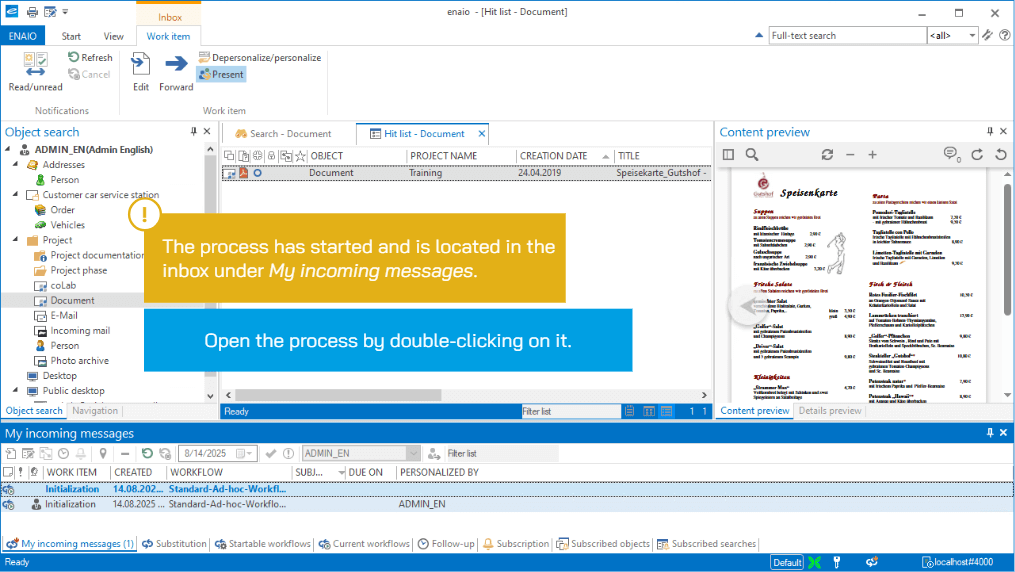
We explain the user interface using interactive instructions that guide you directly through the application. This allows learners to click on each function, gain an independent overview and learn at their own pace.

Whether it's about basic functions or complex scenarios, such as installations and system configurations – our e-learning courses bring processes to life. Virtual training environments offer the unique opportunity to train risk-free and realistically. The learners are not left on their own: Guided exercises and specific tasks accompany them through the application and help them to become active themselves and apply what they have learned directly.

Our formats are complemented by playful elements, such as digital memory games and knowledge quizzes to help learners retain what they’ve learned.
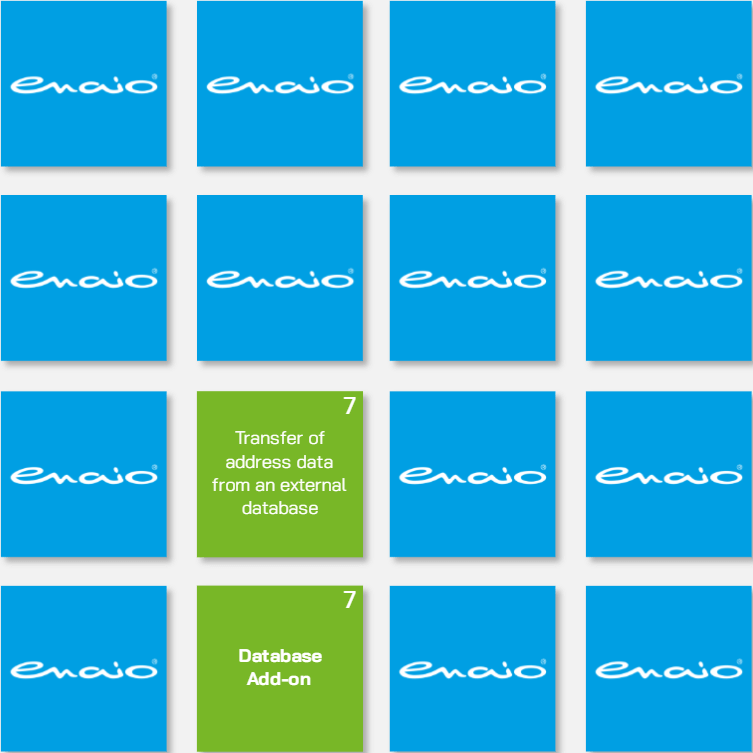
We also use these principles in our blended learning concepts. We combine e-learning with guided webinars and workshops to enable individual learning as well as exchange and in-depth exercises.
We want learners to develop a feel for the system – to understand how it is structured, where potential challenges lie and how to work effectively with it. This form of learning works particularly well if it is practical, needs-oriented and visually clear. And above all, when people can decide for themselves when, what and how they learn.
Our wide range of training courses – from brief input to in-depth scenarios – is available via the OS Academy. Whether users, developers, admins or support team members: Everyone will find content that is precisely tailored to their respective tasks and needs.

LOCATIONS